


A war going on outside
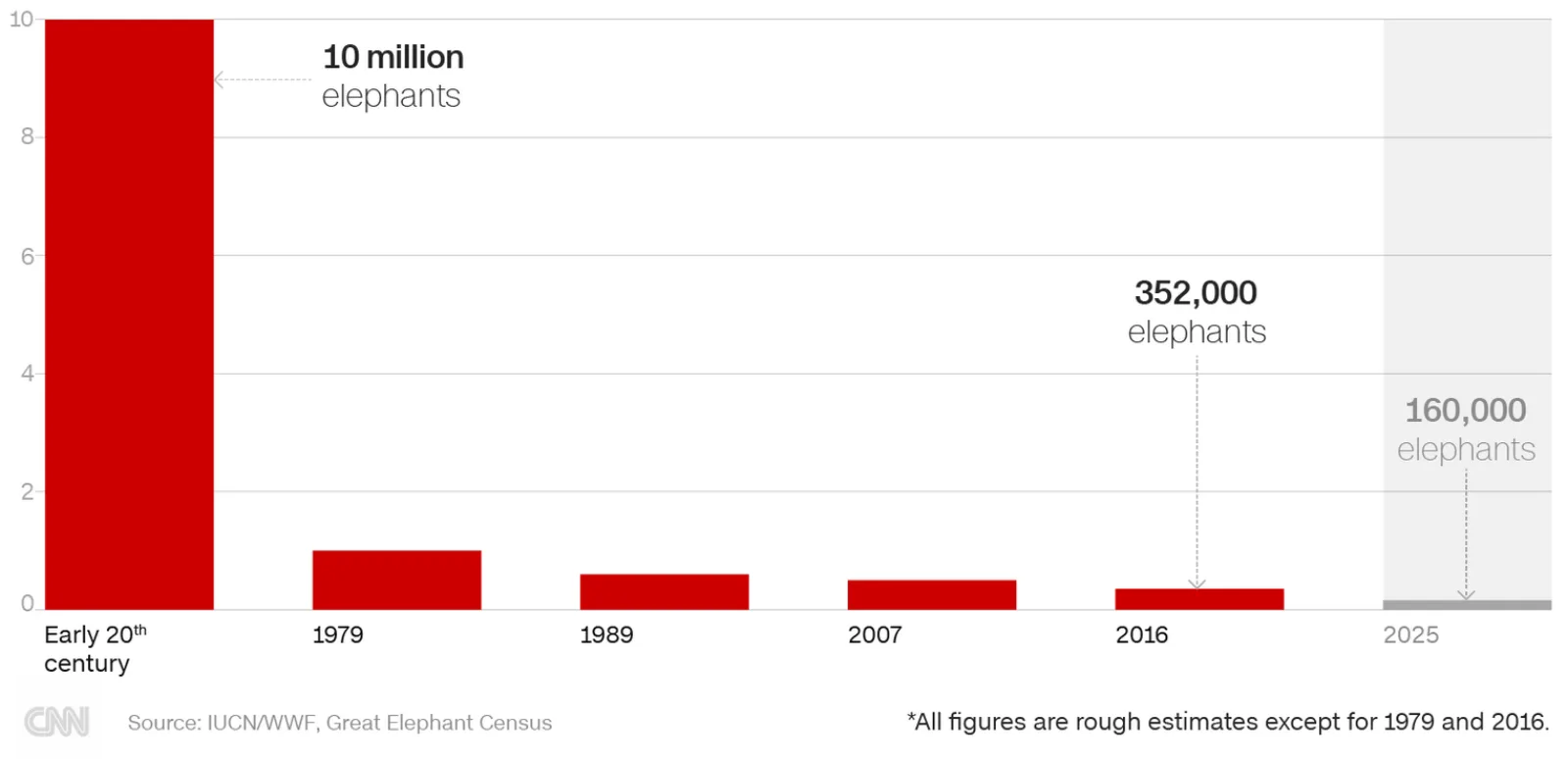
Poaching is an armed war — between a $70 billion industry driven by Asian demand for animal parts, and a small group of bootstrapped wildlife enthusiasts trying to stop them. Africa once had roughly 26 million elephants; today there are about 350,000. The rhino numbers are even starker: from 500,000 to roughly 20,000 left across the continent. It’s a sad story, but one that pushes people to find ways to turn the curve around.
The Coca-Cola shotgun
Fast forward to Kafue National Park — once a rhino paradise, now home to exactly zero of them. Ranger Paul wants to show us something. In his hands is a gun unlike any we’ve ever seen: bright green, with a slightly rounded barrel and a trigger that looks like it was once part of a Coca-Cola can.
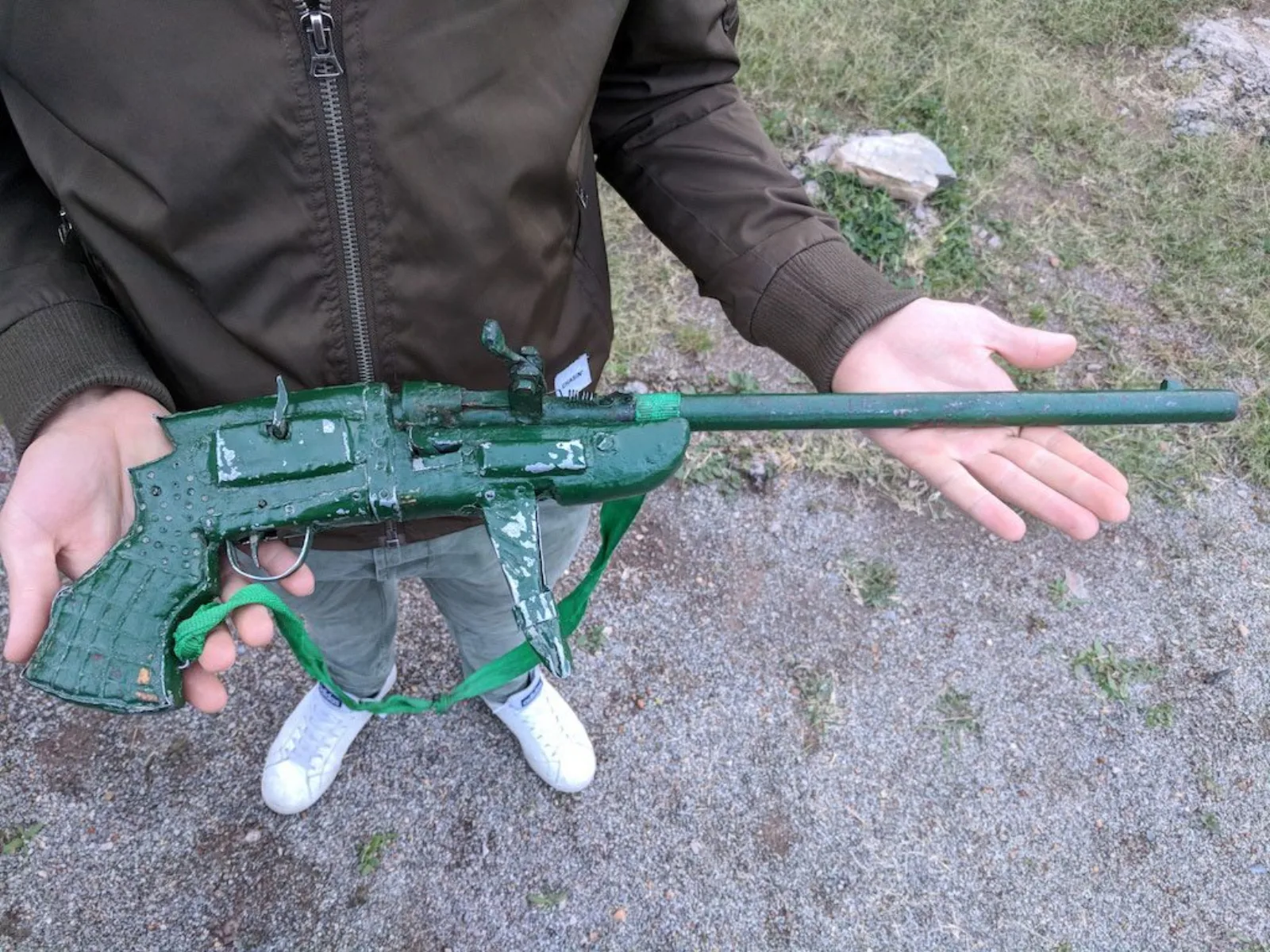
It’s a self-made shotgun. Without Zambian kwacha for a decent AK-47, poachers have learned to forge their own weapons, head into the bush and shoot on sight. Suddenly the kind of guerrilla setup you’d expect from a war story decades ago is not a story at all — it’s happening, right now, around us.
How nerds got psyched
Back to 2016. At Q42 we’d just built an autonomous drone to help Greenpeace document the palm-oil fires in Indonesia. We started asking: where else could this be useful? A bit of digging led us to wildlife poaching — and the statistics above. What if the drone could be the digital eyes and ears of a ranger unit? Anti-poaching organizations told us they’d actually love a drone with the right sensors on it.
Two weeks later, the idea was dead. Drones aren’t allowed in most African parks, and even where they are they crash to the ground more often than they spot anything useful. But the sensor idea wasn’t dead. If drones won’t fly, why not just hang the sensors in trees?
Building a sensor that survives Africa
Building a waterproof, heatproof, animal-proof, solar-powered, 6 W, 9-part device that can detect poachers and stay in a tree for years is not a normal proof-of-concept project. The whole thing came together through collaboration:
- Green Safaris told us early on the sensor had to be close to invisible or it would get stolen — which constrained the size of the solar panels we could use
- Voltaic Systems, a US company that has installed solar panels everywhere from the Amazon to remote Africa, helped us size panels and batteries against the limited sunshine and a 50% duty cycle
- IRNAS in Slovenia provided their open-source PiRa board, which solved a stack of nasty power-management problems for solar-powered Raspberry Pi setups — and conveniently also carried a LoRa chip on board, so the sensor could push poacher alerts to a gateway 5–30 km away
A few Skype calls and a lot of soldering later, we had a hardware setup that worked.
In the field
We landed in Lusaka with bags full of curious electronics that took a while to explain to customs, and four hours later we were in Kafue — a park far rawer than Serengeti or Kruger, and with noticeably fewer animals, because decades of light enforcement had let poachers shoot more or less anything they saw. Before any technical work, we spent the first afternoon meeting the conservation organizations who would actually use what we were building. A few of the things we learned:
- Lion poaching is surging because of Asian demand for lion bones
- Once arrested and sentenced, poachers are often back at large within weeks
- Only 5–25% of the park is actively patrolled by armed rangers
- Some poachers go on “hunting streaks”, crossing the park to take multiple animals and transmitting their location to friends back home for pickup
- Corruption right up to political level keeps the ivory pipeline open
The next day we got to work. The gateway went up a 15 m tree near the lodge, and we drove out with the sensors sending a test ping every 30 seconds. The first result was a disappointing 5 km — hills, as we quickly learned, hurt LoRa range far more than antenna gain helps it. Luckily there was an inactive 30 m radio tower nearby, and the next morning the gateway went up that instead. Range jumped dramatically.
We strapped a sensor to a 10 m pole (the lodge’s swimming-pool swiper) and drove around to test range as we went. About 10 km out, we found the perfect deployment tree: a 15 m marula, the fruit elephants will travel kilometres for, with elephant traces all around. Aggressive elephants as guards seemed like a feature, not a bug, so we got the sensor up the tree fast and zip-tied it in. Driving on to install the second one, a group of lions blocked the road. We sat it out — the lions got bored before we did — and found a flatter spot to deploy.
The next morning we came back for one final reconfiguration of the first sensor. As we walked towards the marula, we saw exactly what we didn’t want to see: a giant male elephant standing under it, calmly eating fruit. Elephants in Kafue are particularly aggressive — decades of being hunted has taught them that humans are either a threat or a target — and a 6,000 kg animal charging at 50 km/h is not something you out-run. We crept closer, hoping for a “Connected” notification on the laptop. At about 60 metres, the elephant spotted us and, miracle of miracles, ran the other way. The sensor’s duty cycle was 2 minutes on, 8 minutes off; the moment it switched on, we reconfigured variables and downloaded logs, with the final command landing just as it switched off again. Eight long minutes later, under the same tree with one eye on the bush, we reconnected, finished, and sprinted back to the car. Both sensors were online. The system worked.
Why it mattered
This was a rough prototype — a small team, one park, hardware that has been redesigned many times since. But it proved the core idea: that passive RF detection could give rangers an early warning hours before cameras or patrols would notice anything.
Everything we learned in Kafue — about power budgets, LoRa propagation, weatherproofing and what rangers actually need from an alert — went straight into the next generation of sensors. Years later, that work is the foundation of ScannerEdge, now deployed across parks in southern Africa and beyond.
It’s still David versus Goliath out there. But David’s catapult, we think, is a pretty techy one.


